From 21 November 2026, the European Union bans exports of plastic waste to countries that do not apply the OECD Decision on waste shipments, under Article 39(1)(d) of Regulation (EU) 2024/1157 on waste shipments (the application date follows Article 86(3)(c)). Vietnam is among these countries. The ban applies to plastic waste, not to finished packaging, but it may affect the recycled plastic supply of packaging manufacturers in the receiving countries.
Key content
| Topic | Details |
|---|---|
| Legal act | Regulation (EU) 2024/1157 on waste shipments, in force since 20 May 2024 |
| Scope of the ban | Plastic waste exported from the EU to non-OECD countries for recovery, including non-hazardous plastic (code B3011). Previously, since 1 January 2021, only hazardous plastic and hard-to-recycle plastic groups (codes A3210, Y48) were banned |
| Date of application | 21 November 2026 |
| Minimum time limit | Non-OECD countries may submit a request to receive EU plastic waste for recycling no earlier than 21 May 2029 (Article 42(4)) |
| Exports to OECD countries | Still permitted, but the European Commission monitors them more closely |
| Next milestone | From 21 May 2027, the EU will in principle stop exporting other non-hazardous waste for recovery to non-OECD countries, except countries on a list approved by the European Commission |
Why packaging suppliers should pay attention
According to the European Commission, in 2025 Vietnam received about 137,000 tonnes of plastic waste from the EU, ranking fourth among receiving countries. This source is now banned. Companies making bags and film with recycled plastic may have to rely more on domestic or other sources, with different quality, prices and documentation than before. This article does not describe the raw material situation of any individual company.
This comes as EU buyers set increasingly strict requirements on recycled content. The PPWR packaging regulation sets minimum shares of post-consumer recycled plastic, depending on the packaging type, from 2030; the calculation and verification of recycled content are expected to be detailed in implementing acts. As raw material sources change, records proving the origin and type of the waste (post-consumer or post-industrial) become even more important.
What suppliers should prepare
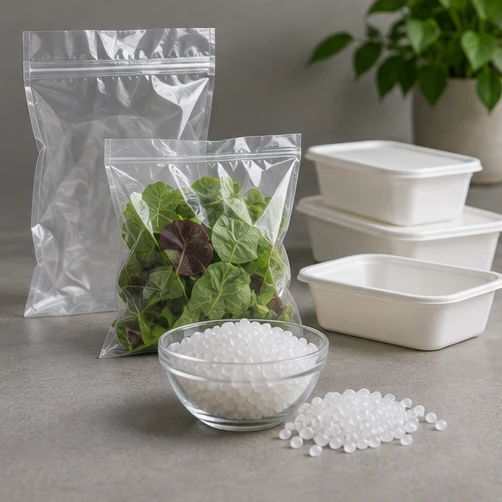
- Review the sources of recycled pellets currently used: where the input waste comes from, and whether it depends on waste imported from the EU.
- Ask recycled-pellet suppliers for records of origin and a post-consumer or post-industrial classification for each lot.
- Talk early with customers about whether the committed recycled content can be maintained, to avoid changing specifications without notice.
- Consider a recycled-material traceability certification that customers accept, so that records do not depend on a single imported source.
- Monitor the list of countries allowed to receive EU waste and the PPWR implementing acts on recycled content.
Information checked against the full text of Regulation (EU) 2024/1157 on EUR-Lex on 28 November 2026 and the European Commission announcement of 20 November 2026. This article is for reference only and is not legal advice.